

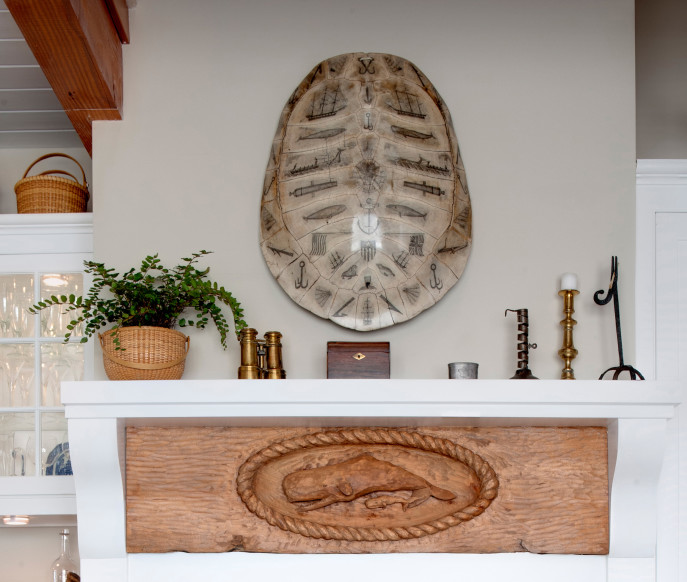
Scrimshaw is the beautiful art form first practiced beginning in 1749, in the days of whaling ships, wizened sea captains and hardy sailors. Whaling was a dangerous undertaking and could never be attempted at night, leaving sailors with free time on their hands. They used it for carving elaborate pictures, lettering and scrollwork on the bones and teeth of sperm whales and the tusks of walruses and other marine animals. The work they left behind is a treasured collectible today. The extremely rare white tortoiseshell shown above is an early nineteenth century British scrimshaw, displayed in my home in Madaket. The whaler’s handwork details ships, whales and equipment used in the seafaring life.
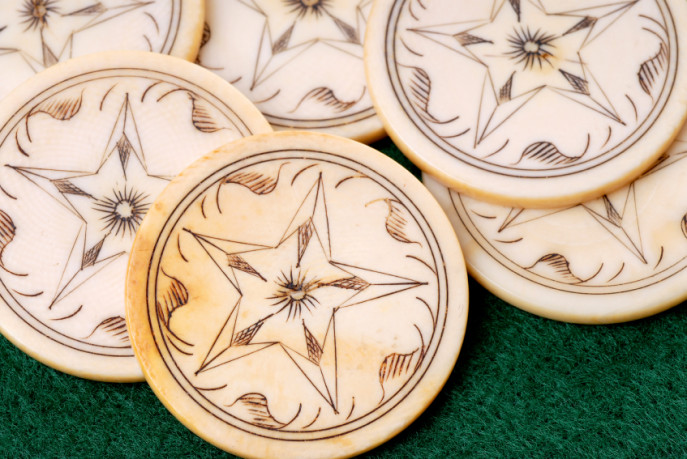
antique scrimshaw poker chips
John F. Kennedy was an avid scrimshaw collector, and brought it back into fashion when he displayed his 37 piece collection in the oval office in the 1960s. Today scrimshaw artists (called scrimshanders) can work with eco-friendly or man-made materials, including cow bones, antlers and ostrich eggs.
This 18th Century scrimshaw is carved from a whale tooth.
It’s impossible to write about the beauty of scrimshaw, though, without first acknowledging the damage being done to tusked animals today by poaching. Where once a ship would set sail with its sights on a whale, and then use every part of the animal for meat, energy and art, there was not an understanding that the seas were a finite resource.

A sea turtle was once plentiful enough that the people of the 18th and 19th centuries could hardly imagine that that creature or any other would be endangered, and in need of protection. Today, though, we are seeing a rapid decline of animals with tusks and horns, often slaughtered for just those parts of their anatomy and left to decompose. Although antique scrimshaw is available for purchase and collecting, strict laws are now in place for animal protection. Elephant ivory has been protected since 1976, and is prohibited from being shipped into the United States or practically any other country in the world.
Poaching continues, however. Rhinos are a threatened animal, under siege for their horns, used in Chinese medicine and particularly sought after in Vietnam. Consumers use ground rhino powder as a health aid, although there is no supporting evidence that it has any impact. Poachers killed 668 rhinos in South Africa in 2012, a 50% increase over the previous year. The World Wildlife Fund estimates another 800 rhinos will die in 2013. To protect them, wildlife managers are injecting the horns of live rhinos with poison and permanent pink dye to make them useless to poachers. Although the poison is not fatal, it will make anyone who consumes the powdered rhino horn ill with nausea and diarrhea.
Anna Merz, who died on April 4, 2013 in South Africa, started a reserve to protect her beloved black rhinos and became a global leader in the fight against their extinction. She is shown in the photo above with the rhino she hand-raised as an orphaned baby, Samia. Samia was devoted to Merz, and followed her everywhere, even trying to enter the house behind her before becoming stuck in the doorway. When Samia gave birth to babies, she presented them to Merz like any proud mother.
Anti-poaching campaigns are underway worldwide, but more attention is needed to protect the earth’s precious resources. Learn more about how you can help from The African Conservancy, World Wildlife Fund, or Stop Rhino Poaching.
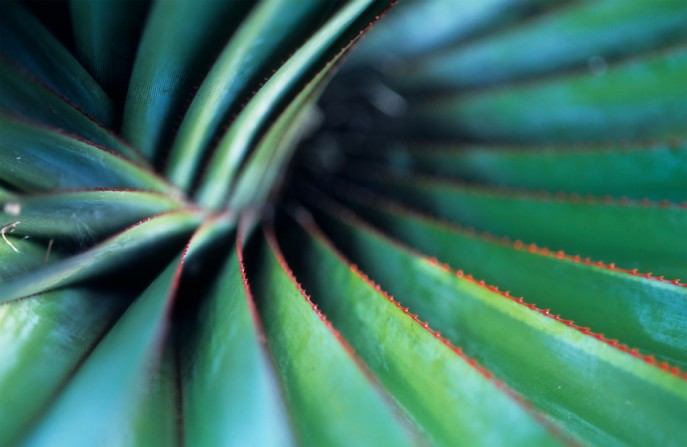 This is a close-up photograph of a spiral palm leaf.
 “The rushing of the sea–tides of the soul; And inspirations, that we deem our own.”
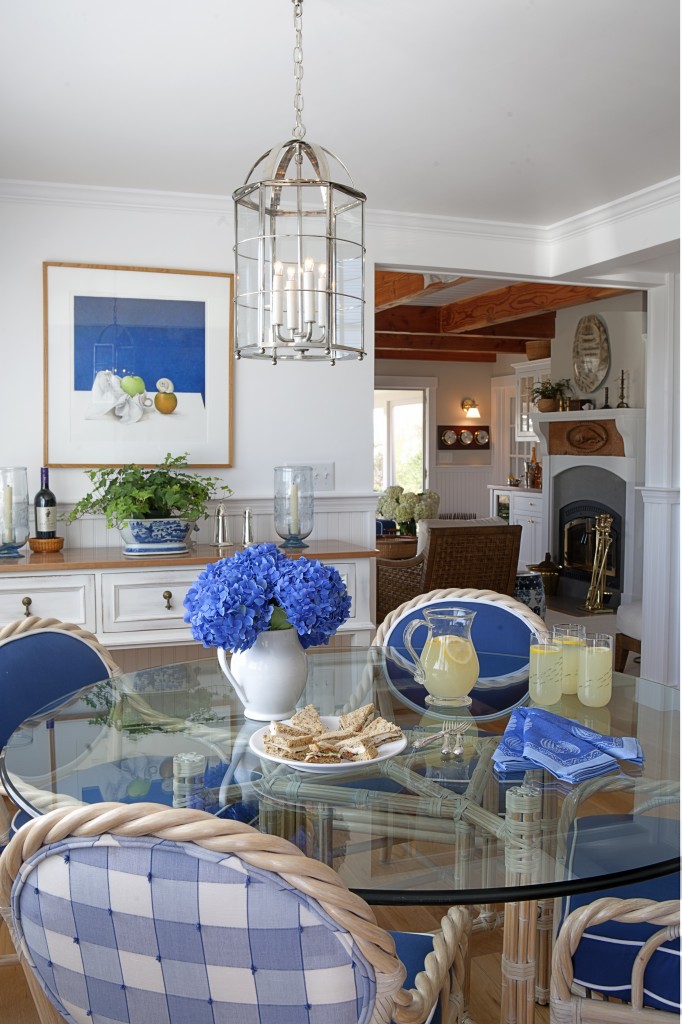
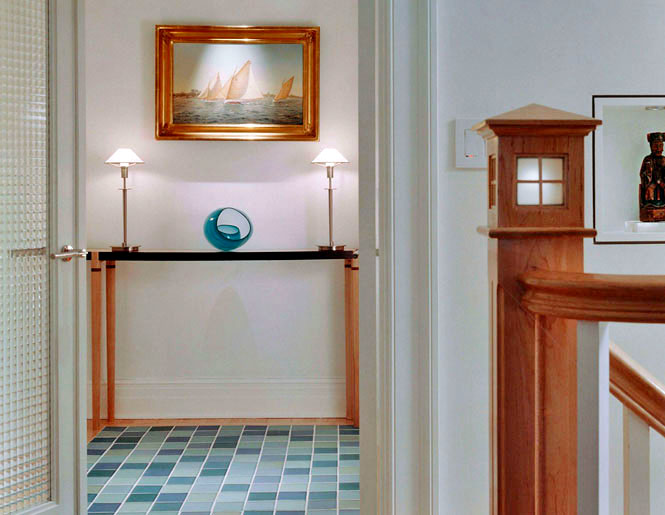
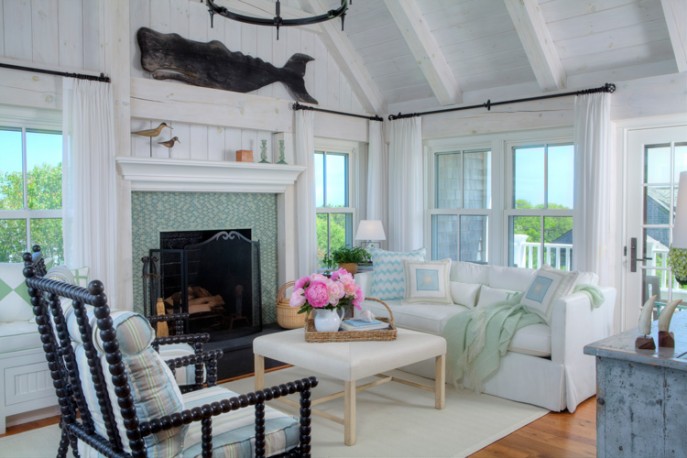
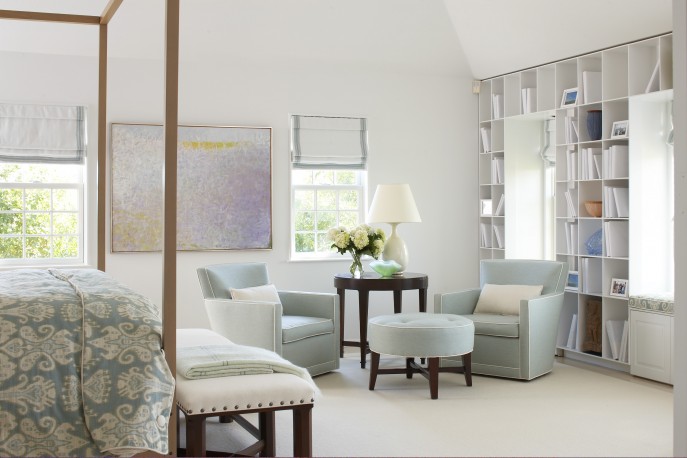

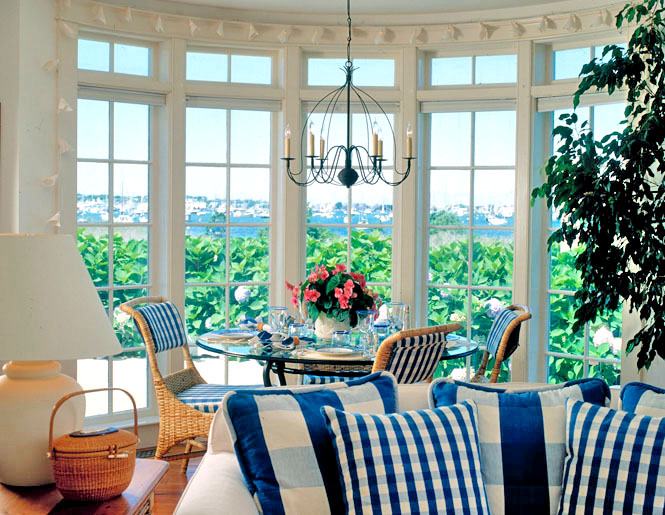
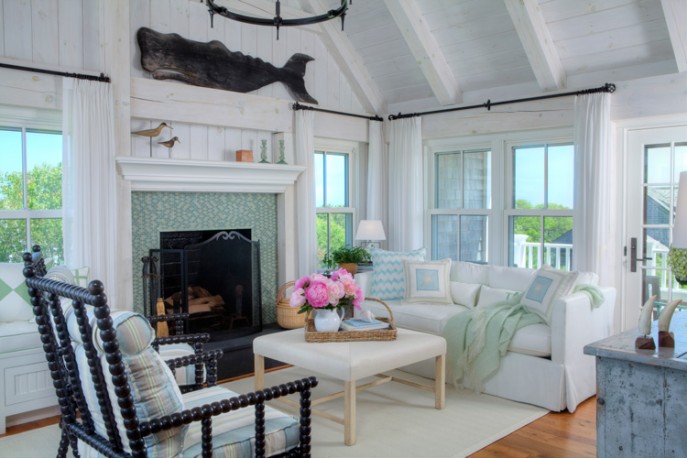
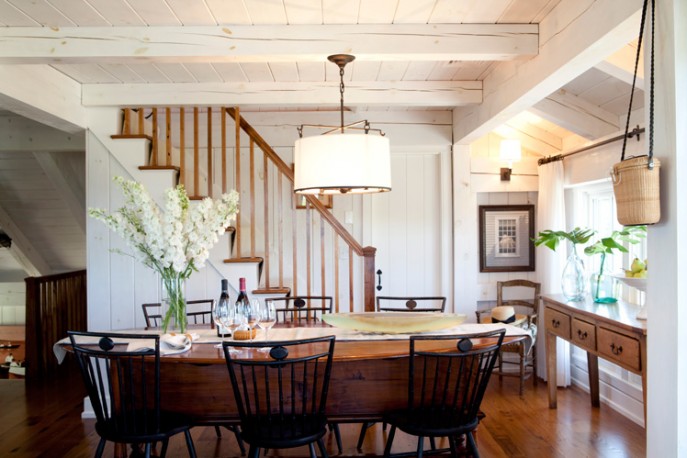 An “upside down” house, in traditional island style, is one in which the living areas and master bedroom are on the second floor, in order to take advantage of stunning water views best seen from a higher vantage point. This secluded home has a beachy charm overlaid with elegance, where precious antiques and original artwork are blended with personal mementos. The dining table above is an antique lacemaker’s table, surrounded by a set of painted 19th century chairs.
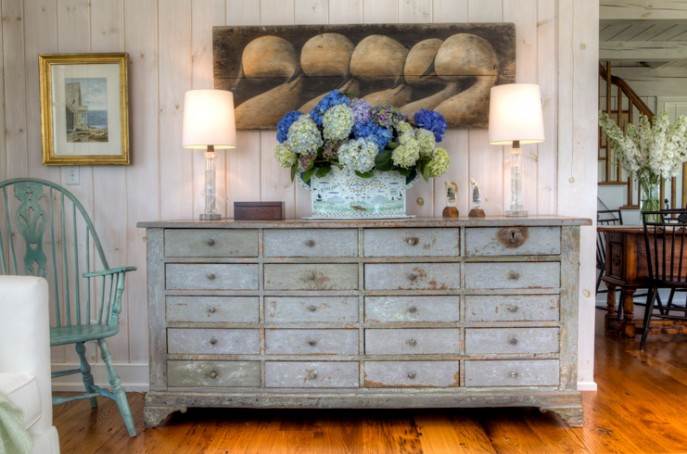 This Swedish Apothecary chest is one of the unexpected treasures found throughout the home. Although its owners are challenged to fill every one of the twenty drawers, we knew it would be perfect here. We re-envisioned the space for this striking piece!
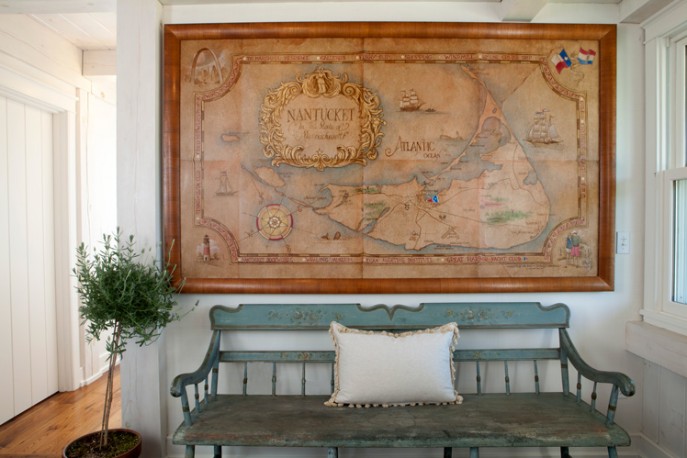 Unusual artwork that doubles as a conversation starter works beautifully in an entry way, when guests are being welcomed. Their first view of the home should be an enticing one, promising equally interesting and elegant rooms to come. Created for Dujardin Design by artist Christian Thee to suggest a pirate’s treasure map, the couple’s favorite spots on the island are pinpointed: the basket museum, the Great Harbor Yacht Club, and the airport where they joyfully make their island arrival.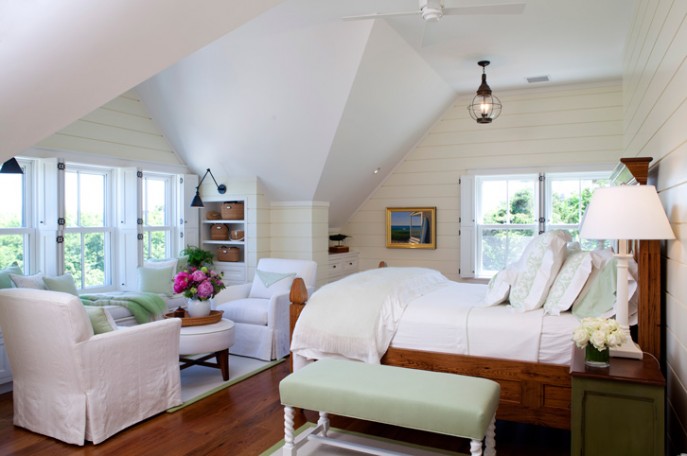
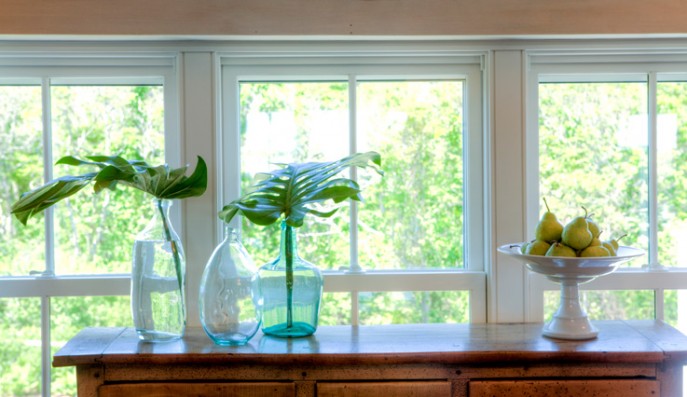
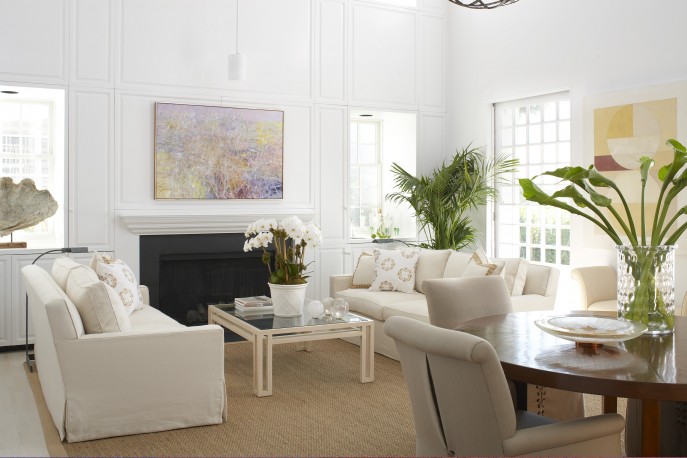


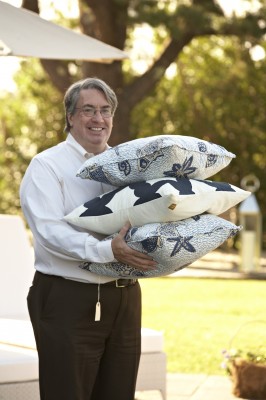
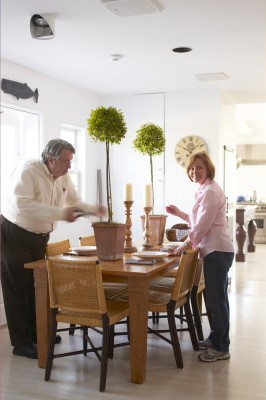
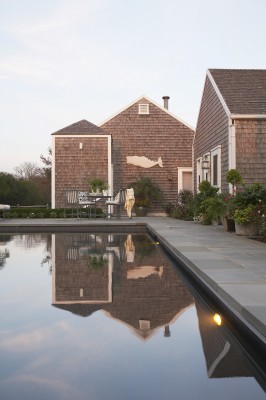
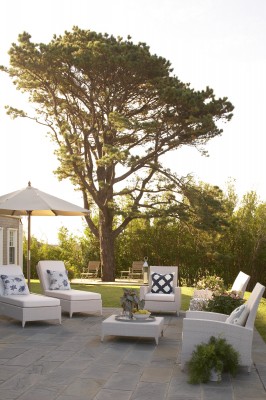
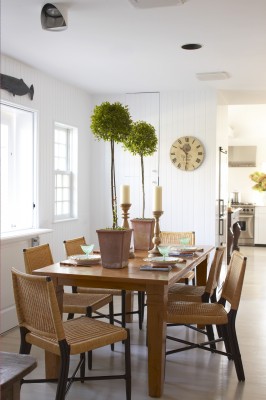
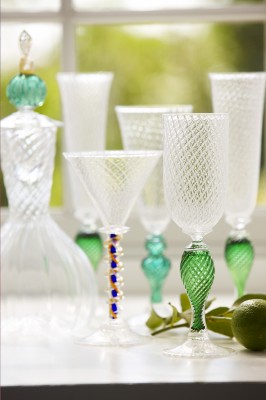
 I’m delighted that my summer home on Nantucket is featured in the April issue of Traditional Home Magazine, on stands now. My husband Frank and I fell in love with this older home in Madaket, near the most beautiful beach on the island, and began a renovation project to make this house perfect for relaxed summer living. I consider it a blessing to live in a house that’s just big enough: big enough to invite friends and family to join us for lazy weekends, and small enough to be manageable. I call it my new “cottage living” phase of life.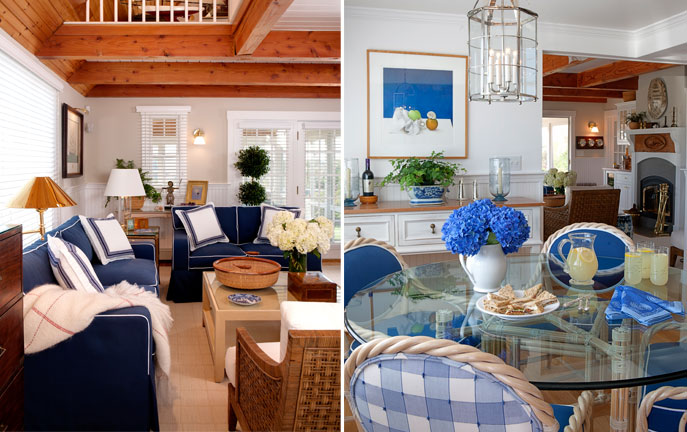

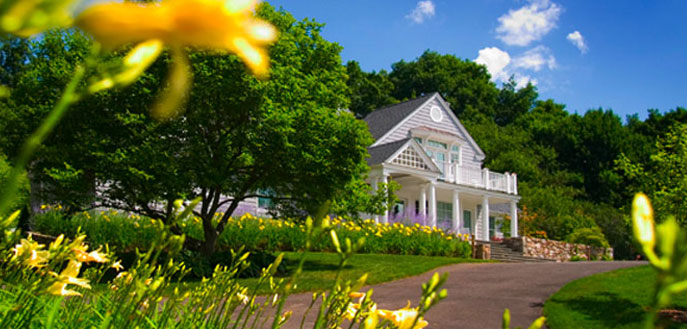
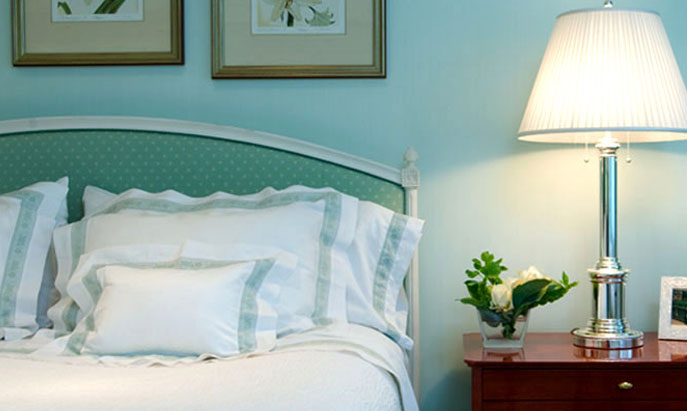 Because my beach house is on Nantucket, it’s that island’s unique slant of light (rivaling Giverny) that I draw upon for inspiration in my design work. In decorating no two projects are alike. They’re client-driven, personal and unique. But there’s a reason for my love of blue and white (Chinese Export Porcelain) with touches of pink (New Dawn roses) and yellow (daffodils dancing down Milestone Road on the island.) There’s a reason for my love of sand and sea colors: to forget the shades of water and sky is impossible when your home is nestled somewhere near a beach.