
Gently Green Great Design What I love Nantucket Life Please Join Me Healthy Stuff

What I Love with Trudy Dujardin, FASID, LEED AP

About Trudy Dujardin, FASID, Leed AP

Trudy Dujardin is known for her passion for eco-elegance, demonstrated in award-winning interiors that combine sophistication and luxury with sustainable design. Believing that a healthy home is the ultimate luxury, she strives to integrate respect for historical preservation, the surrounding natural landscape, and the highest level of interior design. She received both the 2007 and the 2008 Award of Excellence for Green Design from the Connecticut Chapter of ASID and the 2007 Outstanding Alumna Award from Southern Connecticut University. Trudy has been an instructor at Fairfield University in Fairfield, Conn., teaching the university’s first semester-length class on Sustainable Design. She serves on Traditional Home Magazine’s Green Advisory Panel, has written a column, Gently Green, for Nantucket-based Portfolio Magazine, and is a member of the advisory board of athome Magazine. Her breathtaking interiors have appeared in the most prestigious industry publications, including Architectural Digest, Coastal Living, Connecticut Cottages & Gardens, N Magazine, Nantucket Home & Garden, Nantucket Today and Traditional Home. She has been active for many years with the Design Futures Council, the International Board of the Joslyn Castle Institute for Sustainable Communities in Omaha, Neb., and has been a presenter at environmental conferences around the nation, including EnvironDesign 7 in Washington, D.C., and EcoSpheres in Lincoln, Neb. Trudy was involved in the formation of the first Leadership Summit on Sustainable Design and Architecture for the Design Futures Council, an Atlanta-based think tank for design professionals. Trudy has worked in sustainable design since 1987. She is a LEED Accredited Professional, recognizing her thorough understanding of green building practices and principles. From their offices in Westport, Conn. and Nantucket, Mass., Dujardin Design Associates creates interiors nationwide.

Three Books You Shouldn’t Miss

A History of the World in 100 Objects, by Neil MacGregor

This book is the result of a joint project of BBC Radio and the British Museum, from a 100 part radio series presented by British Museum director Neil MacGregor. It’s the history of humanity in 100 objects made by human hands, from cooking pots to sculptures, from mummies to spear points. It’s not just a jumbled list of stuff, though. MacGregor explores questions such as “What happened as people moved from villages to cities? When did societies begin to express themselves through myth, math and monuments? How did people seek pleasure 2000 years ago?”

When you open this book, you’ll find yourself spending time with The Rosetta Stone and the Head of Augustus, a Chinese bronze bell and the Sphinx of Taharqa. It’s a fascinating trip back in time. You’ll be glad you took the time to make it.


The Shallows: What the Internet is Doing to Our Brains, by Nicholas Carr

Nicholas Carr has something he wants us to think about: is the internet changing how we think, even to the level of our internal brain activity? If you’ve ever spent an hour (or a day) surfing the web, and walked away from your computer wondering about the deleterious effects on your mind, you won’t want to miss this book. A Finalist for the 2011 Pulitzer Prize in General Nonfiction, a Finalist for the 2011 PEN Center USA Literary Award, and an international bestseller translated into 22 languages, The Shallows explores how human thought has been shaped through the centuries—from the alphabet, to maps, the printing press, the clock, and now the computer—and questions how information can literally reroute our neural pathways.

His point? We are becoming better at skimming, but we may be losing our capacity for concentration and reflection. If you read it, I’d love to know what you think.


Last Child in the Woods, by Richard Louv

A good book to accompany The Shallows is Last Child in the Woods. Author Richard Louv links the lack of nature in the lives of today’s wired children (kids with a nature-deficit, in his words) with the rise in obesity, attention disorders and depression. He presents a new and growing body of research that indicates that direct exposure to nature is imperative for healthy childhood development, and the physical and emotional health of children and adults alike. This powerful book will inspire you to think in new ways about how to incorporate more nature into your life, and the lives of the children you love.
The Season of Giving


When the winds turn brisk and trees undress, it’s the season of giving! The snap of cold wind and frosty evenings bring us indoors to sit by a crackling fire.  The holidays are upon us, and everywhere we go we are reminded of the joy of celebrating with family and friends.

In the spirit of enjoying all that the holiday season has to offer, I thought I would share a source for table linens that will add beautifully to your celebrations.  Setting a very special table will be easier this year with Leron’s heirloom quality linens, hand-embroidered and hand-appliqued, that showcase old world, European style craftsmanship. www.leron.com


We Are the Stewards of Our Planet’s Future

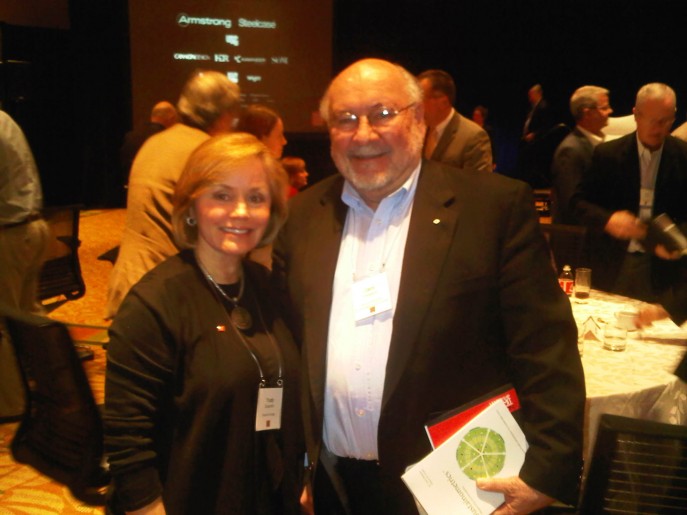
10th Annual Leadership Summit on Sustainable Design Hosted by the Design Futures Council


I’ve recently had the privilege of attending several important and inspirational conferences dealing with sustainable design and how designers, architects and engineers can work together to protect the fragile health of our planet.  The Leadership Summit on Sustainable Design, held in Boston earlier this month, was one of the most stirring and motivating of all.

The Design Futures Council, an interdisciplinary network that explores global trends, challenges and opportunities to advance and shape the future of the industry and the environment, sponsors the Annual Summit.  Limited to a delegation of 100 leaders in the field of architecture, design and construction, the event was convened to identify change drivers, analyze emerging data and explore innovation in sustainable design.

The First Leadership Summit and the Nantucket Principles

There are certain achievements in my life in which I take the most pride:  one of these is my participation in the very first Leadership Summit on Sustainable Design, held on Nantucket Island nine years ago.  At that three day session, the Nantucket Principles were developed, providing a philosophical, strategic and tactical path toward sustainable design.  Since that first session in Nantucket, the Summit has been held throughout North America, in St. Louis, Boston, Santa Fe, Austin, Vancouver, Chicago and Atlanta.

We knew then, and believe today, that the planet can become healthier, greener and more abundant.  We have pledged ourselves to that goal, to engage, to listen, to learn, to educate, and to act toward a strong sustainable model.


I invite you to join us in our work by engaging in holistic living, embracing sustainable principles, and challenging limiting beliefs wherever you find them.

All the Summit speakers gave incredible and moving presentations, some of my favorites among them were:

  • Michael Graves, a DFC Senior Fellow, who recognized students and emerging leaders
  • Natalia Allen, a design futurist, who spoke on Weaving Sustainability and Technology
  • Ed Mazria, a DFC Senior Fellow, who talked about Leadership Toward 2030, What We Are Learning About Our Biggest Challenges
  • Bob Berkebile, a DFC Senior Fellow, who talked about Redefining Design and Practice:  Journey to Regenerative Design
  • William Kamkwamba, a self-educated Malawian inventor, who gained fame in his country when in 2002, he built a windmill to power electrical appliances in his house in Masitala using blue gum trees, bicycle parts and materials collected in a local scrapyard.  His story is told in his inspirational book, The Boy Who Harnessed the Wind:  Creating Currents of Electricity and Hope, written with journalist Bryan Mealer. http://www.amazon.com/Boy-Who-Harnessed-Wind-Electricity/dp/0061730327


Important Points to Ponder

  • Could climate change be happening much faster than some scientists claim?  What would be the result?  James Hanson, director of the Goddard Institute at NASA, talks about it in this video.  Watch it! http://bigthink.com/jameshansen

Thank you for taking the time to read and share these important topics.  As the Design Futures Council declares, we are not waiting for an economic upturn or new regulations.  We are not waiting for someone else to lead.  We will act.  I hope you will too.
Healthier Classrooms for Healthier Kids

Were you aware that there is a Green School Initiative?  Founded in 2004 by parents who were shocked to find out how un-environmental their children’s classrooms were, the Green School Initiative (www.greenschools.net) seeks to improve the ecological sustainability of schools in the U.S.

We’re a long way from the days of one room schoolhouses where children inhaled coal smoke or vapors from oil lanterns, but today’s schoolhouses have big concerns of their own.  Other groups have also formed to advocate for green schools, including the Green Schools Caucus (www.centerforgreenschools.org), today one of the largest bipartisan efforts in the House of Representatives, and the Collaborative for High Performance Schools (CHPS), a non-profit organization dedicated to making schools better places to learn.  CHPS (www.CHPS.net) has created a deep library of resources to help schools better understand the connection between sustainable design and healthy educational environments and improved teacher and student performance.

The Sierra Club has published its fifth annual ranking of the greenest schools in America:  read more at http://www.sierraclub.org/sierra/201109/coolschools/top10/default.aspx


What Should You Be Concerned About?

It’s easy to be an informed parent, teacher or student by asking questions and targeting areas for improvement.  I tell my interior design clients that a healthy home is the ultimate luxury; our kids deserve a healthy learning environment as well!

To begin, parents, teachers, school administrators and concerned citizens can examine their schools for the following:

  • Toxic cleaning products that compromise indoor air quality
  • Off-gassing materials (building materials that release chemicals into the air through evaporation)
  • Pesticide use inside and outside
  • PCBs that may exacerbate chronic conditions such as asthma.  PCBs may be found in materials such as old caulking and fluorescent light fixtures. (Read more at http://green.blogs.nytimes.com/2011/02/07/qa-just-how-dangerous-are-pcbs/)
  • Wooden Playground Equipment treated with arsenic

Other areas to examine:

  • Does the school have a recycling program?
  • Are there carpool incentives?
  • Is there an environmental curriculum in place for students?
  • Does the school use recycled paper, organic cotton for sports uniforms or low-energy computers?
  • Are there healthy school lunches, serving organic and/or locally grown food?

The US Green Building Council’s Leadership in Energy and Environmental Design (LEED) standards can be used as criteria by which to examine our schools:

  • Sustainable Siting: site selection, alternative transportation, storm water management, urban redevelopment
  • Water Efficiency:  water efficient landscaping, water use reduction, innovative waste water use
  • Energy & Atmosphere:  CFC reductions (linked to ozone depletion), renewable energy, reduced energy consumption, green power, reducing ozone
  • Materials and Resources:  building and resource reuse, local materials, recycled content, certified wood
  • Indoor Environmental Quality:  indoor air quality, CO2, ventilation, low-Volatile Organic Compound (VOC) materials, thermal comfort, daylighting
  • Innovation in Design

Treat Yourself and Your Kids to Healthier Lunches!

You can ensure that you and your children are eating as healthfully as you can be when you take care not only preparing their food, but selecting what to pack it in.  Due to traces of BPA and other chemicals, plastic containers are not recommended for holding food, as chemicals can leach out of the plastic.

Visit www.needs.com for better options, such as stainless steel lunch containers, bamboo water bottles, and bamboo lunch bags!

Living on the Edge


I love the energy and inspiration created when a group of people, all committed to a common cause, gather to share information and plans for action.  At  Living on the Edge, a Coastal Communities Conference held on Nantucket on September 29th and 30th, participants focused on the impact of how we use our waterways, the land/sea interface, and ways to knit together the shared edges between the blue water, the near shore, and the watershed.

By exploring new approaches and applying what we learn, we can help protect and preserve the health of our coastal communities.  The goal is to create a coastal waters management strategy that ensures that the sea remains healthy, and maintain the beauty of our oceans and our coastlines.

We were very fortunate to be able to screen a sneak preview of a wonderful new film, Ocean Frontiers:  The Dawn of a New Era in Ocean Stewardship. The movie promises us a new way of thinking, and a new way of living, in concert with the sea. It includes stories and stunning footage from seaports and watersheds across the country, from Boston Harbor to obscure little fishing communities in the Pacific Northwest, from the Florida Keys to the Mississippi Delta.

I encourage you to visit the movie website at www.ocean-frontiers.org to watch a trailer, purchase the dvd, and find out what you can do to get involved with protecting our oceans.

Nantucket Conservation Foundation – Manual


At last count, there were 120 non-profit organizations on Nantucket Island. That says a lot about the kind of people who love this island and call it their home. I’ve written before about some of the good work being done by Nantucket-based organizations and their efforts to preserve the beauty and richness of this little spit of land out in the sea.

One of my favorites is the Nantucket Conservation Foundation. Founded almost 50 years ago, the Foundation now manages 9,000 acres of property here. Its mission is to permanently conserve, maintain and manage natural areas and habitats and encourage an appreciation of the island’s natural resources.


Its doing a wonderful job. Four full-time scientists work with the Foundation to explore the future of fragile resources, and identify new ways to protect and preserve them. They are the caring stewards of our land, our beaches, our dunes and our uncommon heathlands. They protect wildflowers you might not have seen anywhere else, such as the New England blazing star, and the Eastern silvery aster.

They look out for ground-nesting birds, such as the rare northern harrier and migrating shorebirds that include the endangered piping plover. And not least to them, the least tern.

The walking trails, open roads and pastures we all take for granted are more than likely under the Foundation’s care as the island’s largest landholder. Its scientific research extends to the sheep grazing program you can witness for yourself at the Squam Farm property off of Quidnet Road.

I invite you to visit the Foundation at www.nantucketconservation.org to see how you might help them in its efforts to preserve the island for everyone.

Don’t Miss Two New Films that Celebrate the Natural Beauty of the Island!

“Nantucket by Nature” is a singular celebration of the Island’s natural graces, and is an official selection of the Nantucket Film Festival. Featuring never-before-seen images of grace and beauty, it provides an extraordinary four season glimpse of the splendors of the Island. Supported by a stirring and poignant score recorded by local musicians, “Nantucket By Nature” is a remarkable chronicle of the Island in all its natural, jaw-dropping glory.

Watch a trailer of this extraordinary film at www.nantucketfilms.com, or learn more at www.facebook.com/nantucketbynature.

You can purchase the DVD at Nantucket Bookworks Book Store for $24.95. Visit them at www.nantucketbookworks.com.

Another new film made exclusively for the Nantucket Historical Association by Emmy award-winning Ric Burns is simply called Nantucket. This original short film showcases the island’s natural beauty and its significant role in history. Commentary is provided by historians, islanders and writers, including New York Times best-selling author Nathaniel Philbrick, and long-time residents who share their personal stories and unique insights.

The film is being shown daily at the Whaling Museum, and can be purchased as a DVD at the Museum Shop or online for $19.95. Visit the NHA at www.nha.org.

The Ultimate in Green Design: Antiques

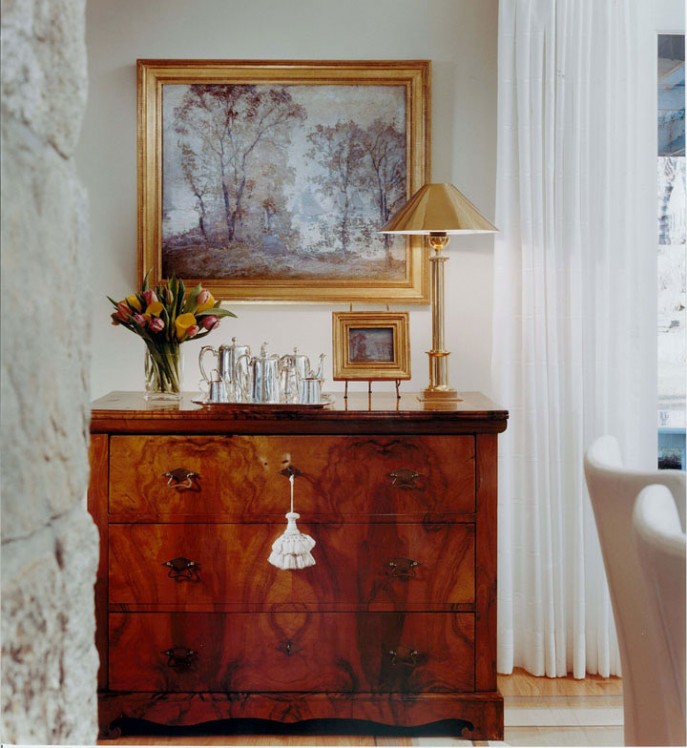
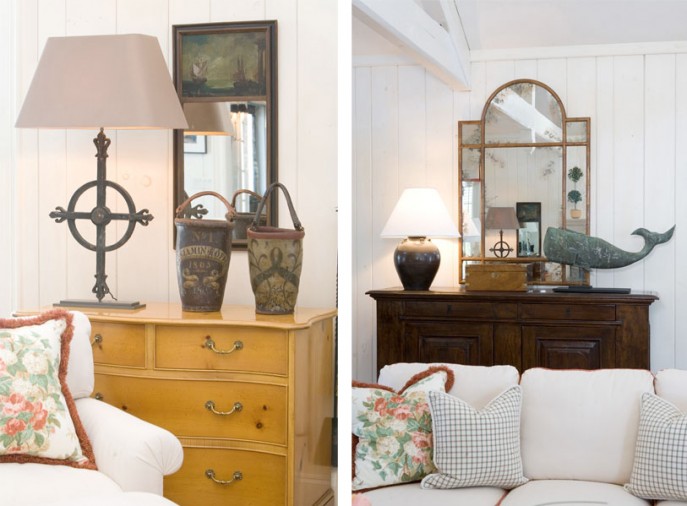
There is a peaceful presence in a room with classically designed furniture, especially those with the patina of age.  No matter how you express your personal style, every home has space for antique pieces:  a writing desk in the corner, reclaimed barnwood on the floor, or a wing chair handed down through generations.  There is an added beauty to the natural grace of aged furniture:  they are the ultimate in “green.”

All Wood Comes From Trees: And trees come from forests.  Yet lovingly cared for antique wooden furniture was cut from old-growth forests long ago.  No new resources are used in its construction, making its restoration and re-use a loving part of caring for the earth.

No Chemical Fumes Arrive with the Furniture: Your home’s interior should be a place of fresh air and health.  Yet any new piece of furniture, cabinetry, flooring or finished wood may have strong chemical odors.  Off-gassing is the process of releasing the vapors that are the residue of many fine finishes.  Antiques were created long ago, with less toxic products, and any off-gassing has long been complete.

No Negative Environmental Impact is Created: Beyond the health issues in your own home are the costs to the planet.  Manufacturing plants, even the very greenest, distribute impurities into our air, waste systems and water.  New furniture requires the production of finishes, dyes and sealants; shipping them demands the creation of packing materials; they arrive in retail stores via large fossil-fuel burning vehicles.

Antique Pieces Bring Unique Craftsmanship to a Room: Even in a contemporary home or modern space, the gentle lines of antique furniture can add a special eye-catching detail to the design.  Rather than a mass-produced item, what you buy and bring home was likely made in a small workshop by a craftsman who made good use of few resources.

Antiques are Recycling at its Best: The sofa your grandmother loved, the barrister bookcase you find at the auction, the softly faded colors of the old Turkish rug don’t belong in a landfill.  The treasures from another time can be loved and used again.  And again.  And again.

Antiques Have Stood the Test of Time: These classic pieces are sturdy and well-made; they wouldn’t still be here if they weren’t.  The quality of their wood is usually stronger, created from timber with tighter growth rings, making repair a simple task when necessary. Furniture that is unworthy of a craftsman’s repair time often ends up in the landfill, adding to our cycle of wasteful consumption.

Antiques Add Beauty and Joy to Life: There is a thrill when you spot the perfect ship’s model, campaign chest or weathervane.  You feel an immediate connection to the beautiful collectible candlestick or Chinese export porcelain.  When you place it in your home, among other well-loved and cherished pieces, you can feel good about your purchase, your home, and reducing your footprint on the surface of the earth.

Remember, It’s Not All Furniture: You can find antique cabinetry, flooring, doors, beams, posts, mantels and other architectural details.  Have fun, and happy hunting!

Meet Me at the Dreamland!

Nantucket is so rich in history, but it’s not all about ship captains and whaling boats and lighthouses.  The Dreamland Theatre, located in the heart of downtown Nantucket, has a history all its own.  Although it began as a meeting house for Quakers in 1832, it has also been a straw hat factory and a roller-skating rink.  It was dismantled and moved to Brant Point in 1883, to be part of the Nantucket Hotel.

In 1906, it was floated back across the harbor to its present location, and became a lodge room, dance hall and moving picture theatre.  In the early 1900’s, residents flocked to the Dreamland to watch vaudeville on Wednesday evenings for twenty cents.  By the 1930’s, the latest in moving pictures was being shown there.

Today, the building is undergoing restoration, and the Nantucket Dreamland Foundation is working to enrich the cultural and intellectual life of Nantucket by providing year-round films and educational programs in one of America’s oldest theatres.  Part of the island’s unique character,  the building’s historic architecture will be retained, but the foundation is also striving to meet “green” building goals.

Soon, islanders will be able to say to each other once again, “Meet me at the Dreamland!”

For more information, visit www.nantucketdreamland.org.

June: A Month of Joy and Weddings

When you design home interiors for a living, as I do, it’s quite natural to find yourself designing events as well. I occasionally decorate clients’ homes for Christmas and other special occasions, so when it came to my own wedding several years ago, I was delighted to have the fun of creating my own celebration.

Although my wedding date was May 1st, auspicious as May Day and known as a spring festival, June is universally known as the month for weddings.

In Roman mythology, the month of June was thought to be lucky for marriage because its namesake, the goddess Juno, promised happiness and prosperity for all who married then. (June was also a month known to be warm enough to take off your clothing and indulge in an annual bath.)

A healthy life is a happy life. So in the spirit of living with joy and celebrating love, here are my ten sweet ideas for a beautiful wedding, taken from my own celebration.


Sweet Ideas for a Beautiful Wedding

1. What do you love? (Other than each other, of course!)

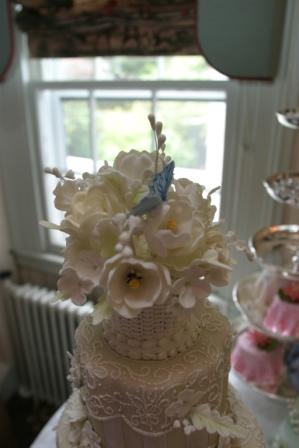
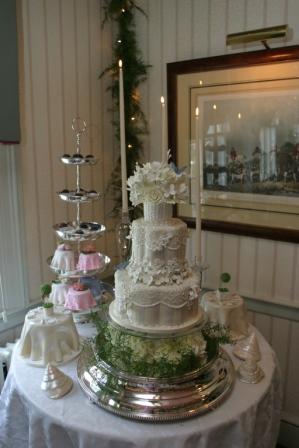
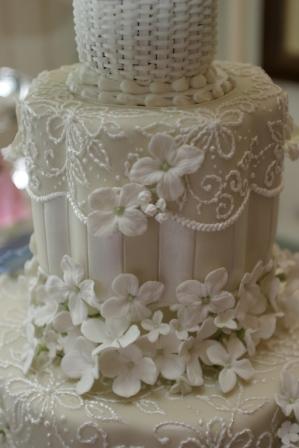
Frank and I split our time between a house on Connecticut’s shoreline, and a home on Nantucket Island. We married at the Roger Sherman Inn in Connecticut, but wanted to honor the special place Nantucket holds in our hearts, as well. Our wedding included elements of Nantucket sprinkled throughout, like the top of our wedding cake: it’s a Nantucket Lightship basket, created in sugar.


2. Carry the theme throughout your celebration.

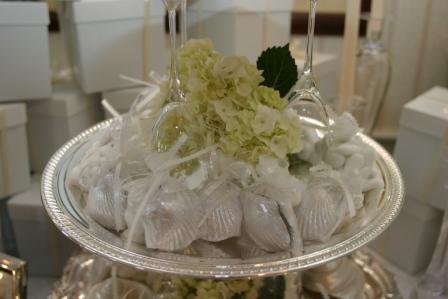
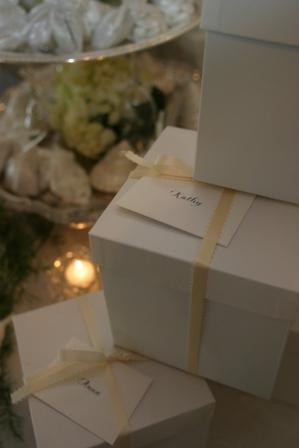
We continued the theme with wedding favors of Jordan Almonds and chocolate scallop shells covered with silver, from Sweet Inspirations (www.nantucketchocolatier.com) on Nantucket.

3. Include something special for just the two of you.

There were two blue butterflies on our cake: one represented me, the other represented Frank. It wasn’t a secret, but not everyone knew why they were there, other than as decoration. But we knew.

4. Share your favorite things!

I collect vintage hotel silver, so the cake rested on one of my treasures: a Victorian hotel silver cake plateau.

5. Enchant with details.

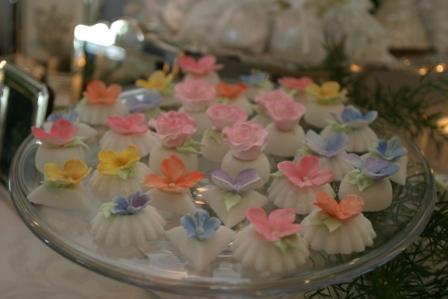
Weddings are made for details: from the ribbons and bows to the flowers and food. I had such fun planning darling confections and pretty place settings. Nothing was too small to be special, such as these sugar cubes for coffee and tea, fashioned into exquisite little blossoms.

6. A perfectly planned event is like telling a story, and the venue is your setting. It should be uncommon, captivating, completely extraordinary!

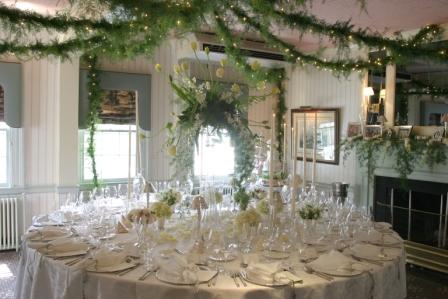
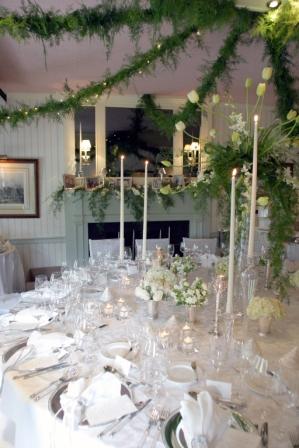
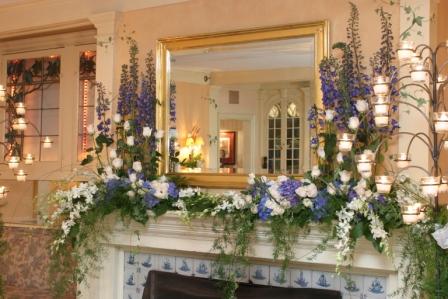
When we chose the room where we would marry and entertain our guests, the shape of the space lent itself perfectly to the idea of a carousel. Festooning the ceiling with great swoops of asparagus fern entwined with sparkling white lights made the room feel smaller and more intimate, and created an other-worldly atmosphere that carried all of us away!

7. Fill your day with flowers!

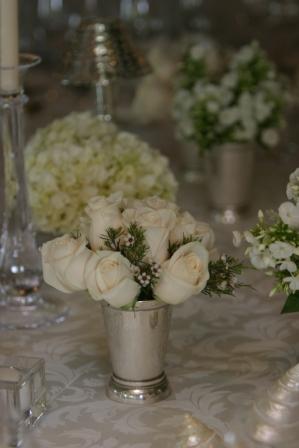
Flowers and weddings go together, both for decoration and by tradition. Bouquets of your favorite blooms infuse the celebration with your unique spirit, so don’t hold back! Roses, hydrangeas, tulips and lilies of the valley were abundant at my wedding, some in sugared icing draped around the cake, others in small groups of posies gathered in silver chalices, and many more cascading from gorgeous arrangements throughout the room.

8. Lots of pretty little things are charming, and add a dash of fun.

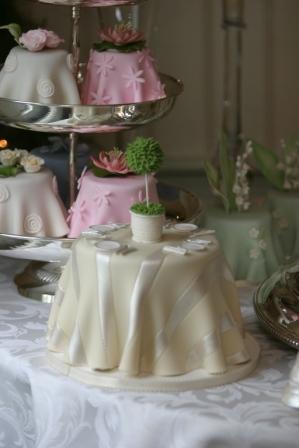
We had lots of delicious cakes and candies to tempt our guests. Each was a delectable work of art all its own, which made the feeling that much more festive! These cakes were mini tabletops, one with a topiary of sugar, and they came in pink and green and blue and white.  Darling!

9. Your family and friends are part of what you’re celebrating: share the love!

Each of our guests took home a miniature wedding cake decorated with blue hydrangeas. Guests who couldn’t attend had little cakes delivered to them. it was our way of telling the people we loved that we couldn’t have done it without them!

10.) Once the stage is set with all the things you love, relax and enjoy your wonderful day. If something goes wrong, laugh it off, kiss your spouse, and celebrate with joy!

Keeping Nantucket Beautiful

There are few things more important to me in life than efforts to retain what is rare and beautiful on this earth.  Nantucket, a tiny island just three and a half miles wide and fourteen miles long, can only be reached by boat or plane, making it a world of its own.

Its distance from the mainland has helped it to retain its quaintness and its charm over the years since it first found itself drawn on a map in 1602.  Grey shingled buildings, roses tumbling over fences, sandy beaches, hundreds of historic homes, and boats bobbing in the harbor combine with the natural beauty of the island to make it a priceless treasure.

ReMain Nantucket


ReMain Nantucket is one organization dedicated to strengthening the vitality of downtown Nantucket, while preserving its unique character and spirit. ReMain is committed to supporting a healthy, year round community on the island, and a flourishing downtown.

In the past twelve months, they have sponsored workshops on seasonal parking issues, presented by transportation experts; held a conference about rising sea levels, in collaboration with the Egan Maritime Institute, the Woods Hole Oceanographic Institute, The Nature Conservancy, Climate Central, and the Maria Mitchell Association; and hosted a presentation on sustainable downtowns, presented by the director for the National Trust Main Street Center.

They have been responsible for community initiatives, such as purchasing the Mitchell’s Book Corner property and leasing it to a local entrepreneur, Mary Jennings. With the goal of renovating an historic property in an environmentally thoughtful way, they sought the expertise of local engineers and architects.  The building renovation was awarded a silver LEED certification from the U.S Green Building Council.

ReMain Nantucket is a sponsor of Nantucket Race Week, August 13-21, 2011, the Nantucket Comedy Festival, July 28-30, 2011, and the Nantucket Garden Festival, July 20-23, 2011.  The organization only sponsors non-profits, and they ask for a pledge of sustainability for their events, as well as offering guidelines to help make that happen.

Learn more about this wonderful organization at www.remainnantucket.org.

Sustainable Nantucket

Sustainable Nantucket is working to build a more locally-based and self-reliant food system on-island, along with a strong local economy.  They are making efforts to expand agricultural production, promote local farmers’ markets, encourage local food use in Nantucket restaurants, schools, hospital and other venues, and educate the community about sustainability.

Islanders can support their good work at the annual Farm Fresh Feast, happening July 16 at Moors End Farm. The menu is all “Nantucket Grown,” and will include a Nantucket Bay Scallop Ceviche, Herb-Crusted Dayboat Cod with Tomato Basil Salsa, Grilled Seasonal Vegetables from Pumpkin Pond and HUmmock Pond Farms, and a selection of delicious desserts.  For more information and to purchase tickets, go to http://www.sustainablenantucket.org/events-2/upcoming-events/

Approximately 1/3 of our carbon footprint as a nation comes from industrialized agriculture, which also uses pesticides and herbicides, degrading our soil and water.  When you support local food production, you help to reduce the demand for food produced by this system, and at the same time, enjoy better taste, fresher foods, and a higher nutritional value.

Sustainable Nantucket operates a Farmers and Artisans Market on Saturdays on North Union and Cambridge Streets from 9 a.m. to 1 p.m. Enhancing the Nantucket feeling of community, vendors include growers, artisans and prepared food purveyors.  There are live music performances, kids’ activities, demonstrations and more.  July is Tomato, Tomato Month, with a “making salsa” demonstration on July 23rd.

Vendors include one of my very favorite places for fresh organic produce, Pumpkin Pond Farm (www.pumpkinpondfarm.com), as well as Bartlett’s Farm, Gourmet Gardens, Nantucket Coffee Roasters and more!

There is also a Mid-Island Market at 113 Pleasant Street on Tuesdays from 3:30 to 6:30 p.m. that will run through August 30th, providing a second location and date for islanders who may not make it to the downtown market on Saturday, or who are ready to replenish their supplies.

Sustainable Nantucket also operates a Farm to School program to serve healthier meals in school cafeterias, builds school gardens and provides information to parents, teachers and students about healthy eating.  A Youth Council Program began in 2008 to help the island’s youth become leaders in implementing sustainable practices, and ongoing Outreach/Education efforts are made through classes, workshops and targeted campaigns.

Learn how you can help at www.sustainablenantucket.org.